What Is Saju? The Korean Four Pillars of Destiny Explained
🔮 Get Your Free Multi-Fortune Analysis — 5 Ancient Systems, 1 Unified Reading → MultiFortune.xyz
🔮 Get Your Free Multi-Fortune Analysis — 5 Ancient Systems, 1 Unified Reading → MultiFortune.xyz
Your birth date holds more information than you've been told. Not just the day and year — but the hour, the month, and a layered code of elements and energies that Korean fortune readers have been mapping for over a thousand years.
That system is called Saju (사주), and if you've ever felt like Western astrology gave you the outline of yourself but not the full picture, this is the layer you've been missing.
By the end of this guide, you'll understand exactly what Saju is, how the Four Pillars work, and one concrete step to start applying it to your own life today.
What Is Saju? The Ancient System That Maps Your Destiny
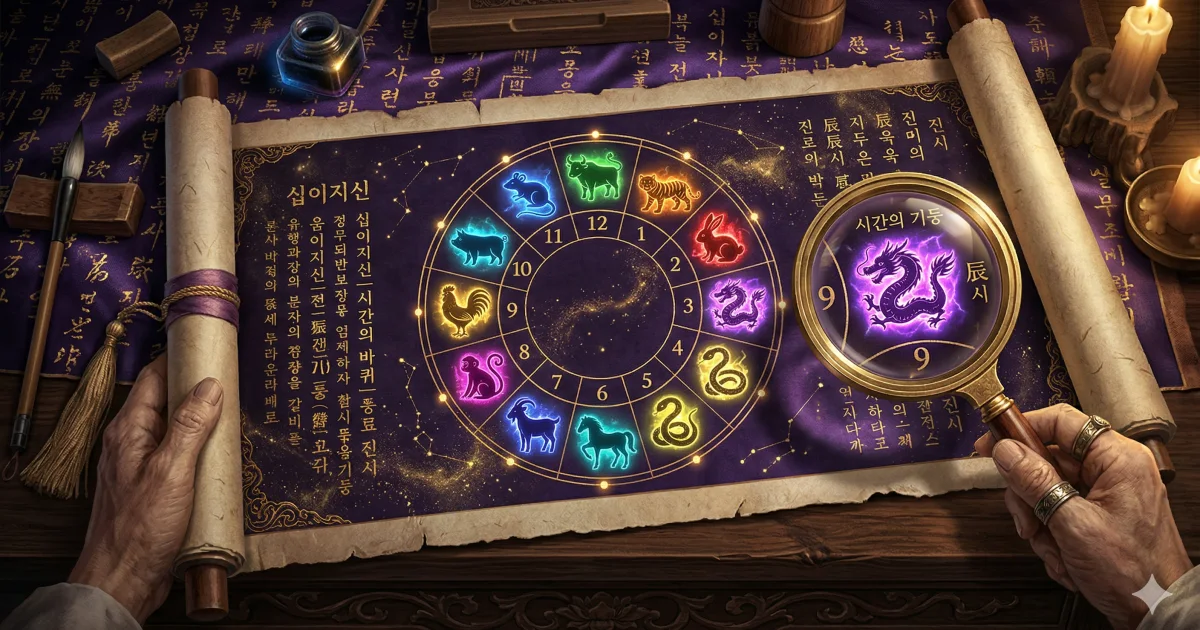
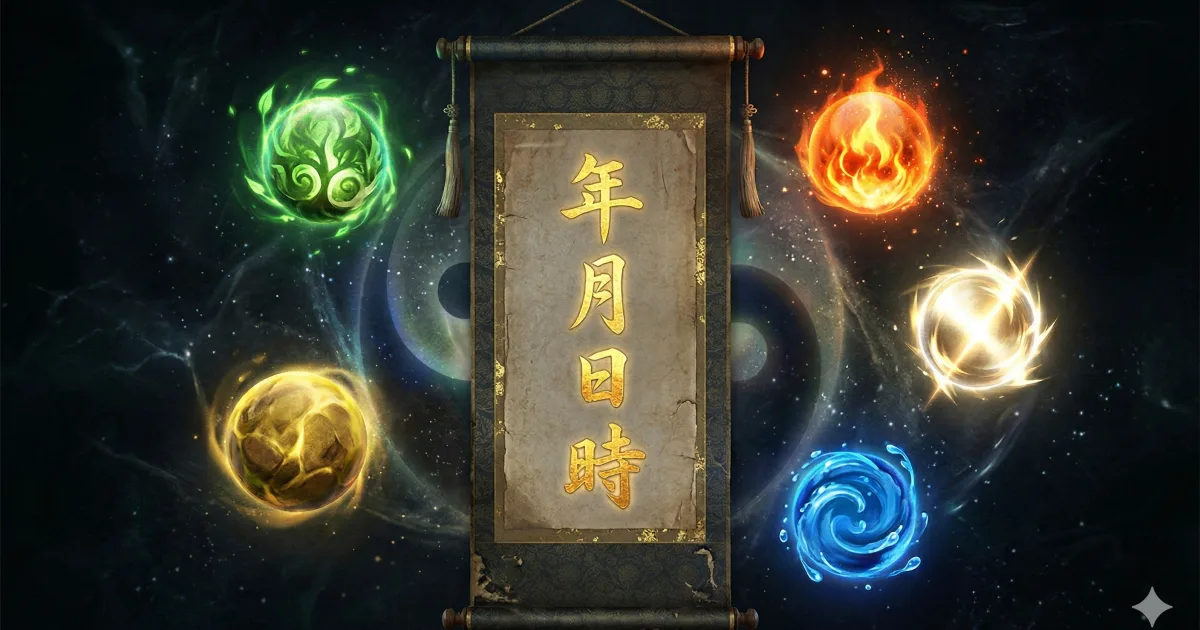
Saju (四柱) literally translates to "Four Pillars" — a reference to the four key time markers of your birth: your year, month, day, and hour. Each pillar is made up of two characters — a Heavenly Stem and an Earthly Branch — drawn from the Chinese sexagenary cycle. Combined, these four pillars create a unique 8-character code called your BaZi, the raw blueprint that Saju readers interpret.
The system originated in China during the Tang Dynasty (618–907 CE) and was deeply woven into Korean court culture by the Joseon period, where royal astrologers advised emperors on governance, marriages, and military campaigns. Today it remains one of the most consulted fortune systems in South Korea — millions seek professional Saju readers before major life decisions.
But here's what most introductions miss: Saju isn't primarily a character description system. It's a timing system. It doesn't just tell you who you are — it tells you when your energy peaks and when it pulls back. That's the layer that makes it genuinely useful for real decisions, not just self-reflection.
The Four Pillars: What Each One Reveals About You
Think of your Saju chart as a photograph taken at the exact moment of your birth — capturing the energy of the universe from four different angles simultaneously.
1. The Year Pillar — Your Roots and Inheritance
The Year Pillar reflects the broad generational energy you were born into. It governs your relationship with your family of origin, your ancestors, and your early childhood environment. It also shapes how the outside world perceives you — your public face before you've said a word.
Think of it as the soil you were planted in. You didn't choose it, but it profoundly shapes what you can grow into.
2. The Month Pillar — Your Career and Life Purpose
The Month Pillar is often called the "career palace." It reflects your formative environment (roughly ages 15–30), your professional drive, and the conditions that allow you to thrive most naturally.
If you've ever wondered why your work feels effortless in some environments and completely draining in others, the Month Pillar is usually the first place a Saju reader looks.
3. The Day Pillar — Your True Self
This is the pillar experienced Saju readers focus on first. The Heavenly Stem of your Day Pillar is called your Day Master — it's your core self, the "I" at the center of your chart. Your Day Master element (Wood, Fire, Earth, Metal, or Water) reveals your fundamental nature: how you process emotion, where your energy flows, and how you relate under pressure.
It's the Saju equivalent of the Western rising sign — the real you, not the face you present. The Earthly Branch of this pillar also represents your spouse or primary partner energy, making it the most relationship-rich pillar in your chart.
4. The Hour Pillar — Your Inner World and Legacy
The Hour Pillar governs your subconscious mind, your relationship with children, and the legacy you leave behind. It holds your most private ambitions — the dreams you carry but rarely speak aloud.
This is also the pillar most often skipped in casual readings, yet it's frequently where the most surprising self-recognition lives. For a deep dive into exactly what your birth hour changes, How Your Birth Hour Changes Everything in Saju covers this pillar in full detail.
The Five Elements: The Code Behind the Code
Every character in your Saju chart — all eight — carries one of five elemental energies: Wood, Fire, Earth, Metal, or Water. These aren't metaphors. In Saju, they're functional categories describing how energy moves, transforms, and interacts.
- Wood (木) — Growth, expansion, creativity, forward vision. Spring energy.
- Fire (火) — Expression, passion, visibility, recognition. Summer energy.
- Earth (土) — Stability, nurturing, boundaries, groundedness. Transitional energy.
- Metal (金) — Precision, authority, discipline, completion. Autumn energy.
- Water (水) — Wisdom, flow, depth, intuition. Winter energy.
Your chart will have some elements strongly represented and others weak or absent. Today's Eastern calendar sits in a 丁-未 (Fire-Goat) day — a day heavy with expressive, outward Fire energy. It's a useful reminder of how elemental energy shifts daily, not just at birth — and why timing matters in Saju as much as character.
Here's the insight most beginners never get told: the elements you're missing are often more revealing than the ones you have in abundance. A chart with no Water element, for instance, often describes someone who struggles with deep introspection or had to develop emotional intelligence the hard way — through experience rather than instinct. The gap is the data.
The elements interact through two core dynamics:
- The Generating Cycle — Wood feeds Fire, Fire creates Earth, Earth produces Metal, Metal collects Water, Water nourishes Wood. This is the flow of support.
- The Controlling Cycle — Wood controls Earth, Earth dams Water, Water extinguishes Fire, Fire melts Metal, Metal cuts Wood. This is productive friction — tension that creates growth.
Where these cycles play out across your specific four pillars is where Saju reading becomes genuinely sophisticated — and personal.
What Saju Reveals Across the Life Areas That Matter
Love & Relationships
Your relationship energy lives primarily in the Day Pillar's Earthly Branch, but your overall elemental balance shapes how you love and attach. A Metal-dominant Day Master tends toward high standards and needs demonstrated stability before opening up emotionally. A Fire-dominant Day Master falls fast and intensely but may struggle with the slower rhythms of long-term partnership.
Compatibility in Saju isn't about matching elements — it's about whether one person's elemental energy fills what the other is missing. The most enduring pairings are often between people whose charts together create a more complete elemental cycle, not people who mirror each other.
Career & Money
The Month Pillar governs your professional life, but the relationship between your Day Master and the "Wealth Star" in your chart determines your money patterns. When your Wealth element is present and well-supported by other pillars, consistent earning comes naturally. When it clashes — particularly with your Day Master — financial instability often persists until the underlying tension is understood and worked with consciously.
Right now, with the Sun at 15° Aries squaring Jupiter at 16° Cancer (a tight 0.7° orb), there's a live tension between bold ambition and the need for emotional security. In Saju terms, this is the Fire-Water dynamic playing out cosmically — a pattern that shows up in charts where the drive to achieve keeps colliding with a deeper need to feel safe before acting. If your chart carries this tension natively, this is an active window for it.
Health & Wellbeing
Each element in Saju maps to specific organ systems: Wood governs the liver and eyes; Fire governs the heart and circulation; Earth governs the spleen and digestion; Metal governs the lungs and large intestine; Water governs the kidneys and adrenal system.
When an element is severely depleted or overwhelmingly dominant in your chart, Saju practitioners consider the corresponding organ system an area of potential vulnerability — and recommend elemental balancing through food, environment, color, and practice. It's one of the most practical dimensions of the system and one of the least discussed in Western-facing introductions.
What Saju Catches That Western Astrology Misses (And Vice Versa)
Both systems have genuine strengths worth being direct about.
Western astrology excels at psychological depth. The 12-house system maps the inner landscape in ways that remain remarkably precise even under modern psychological frameworks. It's strong on character, motivation, and inner conflict.
Saju excels at timing and relational dynamics. The 10-year luck pillars (大運, Daewoon) — which shift your chart's elemental energy in decade-long phases — offer a granular map of when specific doors open and close across your lifetime. Western natal astrology has no direct equivalent to this mechanism.
The cross-system insight worth knowing: when your Saju chart shows a new 10-year luck pillar beginning and your Western chart shows a major transit activating the same life area, those windows are the highest-signal inflection points in your life. Neither system alone would flag both signals simultaneously. That convergence is where the most accurate guidance lives — and it's exactly what a multi-system analysis is built to catch.
How to Start Reading Your Own Saju Chart
Step 1: Gather your birth data. You need your birth year, month, day, and — critically — your birth hour. Even an approximate window (early morning, afternoon, late evening) gives you a working chart, though exact times improve accuracy significantly.
Step 2: Generate your eight characters. Free online tools convert your birth data into the BaZi chart. Input your details and you'll receive the four pillars, each with its Heavenly Stem and Earthly Branch.
Step 3: Identify your Day Master. Find the Heavenly Stem of your Day Pillar. This single character — Wood, Fire, Earth, Metal, or Water — is your elemental identity. Understanding what that element says about your core nature will give you more accurate self-recognition than most personality frameworks.
Step 4: Count your elements across all eight characters. Note which element is strongest (your dominant energy pattern) and which is absent or weakest (your growth edge and area of challenge). That absence is often the most useful data point of all.
Step 5: Locate your current 10-year luck pillar. Each person's luck pillars shift at different ages. Knowing which pillar you're in right now gives you the "decade forecast" — what elemental energy is either supporting or challenging your Day Master for the next ten years.
Your Next Step
The single most valuable thing you can do with Saju as a beginner: find your Day Master element and sit with it for one week.
Not the full chart. Not the luck pillars. Just the element at the core of your Day Pillar — and notice how it shows up in how you respond to stress, how you make decisions, and where your energy naturally wants to go. That one character will tell you more about yourself than most personality tests.
The Moon is currently in Scorpio, forming a trine with both Mercury and Jupiter — an energy that rewards exactly this kind of structured, penetrating self-inquiry. It's one of the better days to begin reading yourself seriously. Don't skip past the surface.
🔮 Get Your Free Multi-Fortune Analysis — 5 Ancient Systems, 1 Unified Reading → MultiFortune.xyz
Frequently Asked Questions
Is Saju the same as Chinese BaZi?
They share the same root system — BaZi (Eight Characters) is the Chinese name for the same Four Pillars framework. Korean Saju has developed distinct interpretive conventions over centuries, but the foundational system is identical. The differences are in nuance and cultural context, not in core structure.
Do I need my exact birth time for Saju?
The Hour Pillar requires your birth time. Without it, you're working with three of the four pillars — still highly useful, but incomplete. If you don't know your exact birth time, use an approximate window (morning, afternoon, evening) and treat the Hour Pillar as tentative until you can verify. Hospital birth records are often the most reliable source.
How is Saju different from Western astrology?
Western astrology focuses on planetary positions and their psychological meaning. Saju focuses on the elemental code embedded in your birth time — and its most powerful feature is the 10-year luck pillar system, which maps how your chart's energy evolves decade by decade. Western natal astrology has no direct equivalent to this timing mechanism.
Can Saju predict specific events?
Saju is better understood as a map of energy patterns and timing windows, not a prediction machine for specific events. It identifies when conditions are favorable or challenging for particular life areas. The events themselves are shaped by your choices within those conditions. Think of it as weather forecasting — knowing a storm is likely lets you prepare, but you still decide whether to go outside.
What is a Day Master in Saju?
Your Day Master is the Heavenly Stem of your Day Pillar — the elemental archetype at the center of your Saju chart. It's considered your fundamental self: how you process experience, relate to others, and move through the world. It's the single most important character in your chart for self-understanding and the first place any serious Saju reading begins.
Saju · Four Pillars of Destiny · Korean Fortune Telling · Birth Chart · Beginner Guide · Five Elements · BaZi

